Parkgate Regattas

Regattas were held at Parkgate from the early nineteenth century  into the first quarter of the twentieth century. They started initially under the auspices of the Dee Yacht Club, some of whose members and officials were  actively involved in the Chester Regattas and recognised that Parkgate also would be a good place to hold a regatta.  A regatta was organised in Chester in 1814 to celebrate the Peace of Paris and they were also held in the years following to celebrate the King’s birthday (George III and later George IV). They were paid for by local subscription and organised by a committee of local gentlemen and included races for ‘gentlemen amateurs’, fishermen and races for the wives and daughters of fisherman. Two of the men involved in organising the regattas were John Lloyd and his son Edward Watson Lloyd.

John Lloyd was Prothontotary or Clerk to the Assize Court of Chester and North Wales, and, although he lived at the Mount in Chester, he and his family were regular visitors to Parkgate. They were recorded amongst the list of visitors in 1825 and in 1841 Edward Watson Lloyd was living in Leighton while his father was also boarding at Parkgate. Both men were members of the Dee Yacht Club and Edward Watson Lloyd was also a founder member of the Chester Victoria Rowing Club which began in 1838.

The first report of a Regatta at Parkgate was in 1827. Parkgate at that time, although it was no longer the departure point for the Dublin Ferry, still attracted summer visitors for the bathing season and accommodation was provided in hotels and lodging houses. The regattas were an amusement and attraction for these visitors.

According the local newspaper Parkgate was a more attractive venue than the Mersey for a regatta because of the ‘wider expanse of its waters’ (Chester Chronicle – Friday 11 September 1829) although it was not suitable for crafts of the larger classes. In fact the regatta that was held on the Mersey in 1829 at Secombe was the first for many years according to Gore’s Liverpool General Advertiser – (Thursday, 10 July 1828), though this was because of a disastrous accident at an earlier event rather than the Mersey being unsuitable.

‘the last time that a public boat race, on a considerable scale, took place in the Mersey was on the 23rd June 1783 when a serious accident occurred, by the giving way of a scaffold at the stern of vessel, building in Breckell’s yard, at the south end of the Parade: fifty or sixty individuals were dangerously hurt, and one life was lost. Inconsequence of this occurrence, the annual boat races were suspended, and they have not since been renewed.’

Like Chester, there were at Parkgate men who earned their living by fishing and had the necessary skills to compete in a regatta and many of them had also served in the Navy at one time or another.  Also resident in Neston and involved in organising the regattas  were Charles and John Monk, both sons of Parkgate customs officer, William Monk. Lieutenant John Monk RN saw active service and was wounded in action during the bombardment of Algiers in 1816 and Charles Monk was, in 1823, Commander of the guardship Redbreast and Superintendent of Quarantine at Bromborough Pool.

1827 – 1844

In 1827 a race between seven yachts was held which was watched by ‘genteel company from Chester, Liverpool and the surrounding countryside’. The first prize was a cup worth 6 sovereigns, a secDSCF5923ond prize of 2 sovereigns and a third of one sovereign. Edward Watson Lloyd, then aged twenty five was placed fourth with his boat, Horatio. The winner was Joseph Crowther’s Maria with Charles Brown’s Ariel coming in second. Prizes were distributed at the Red Lion and a select company had dinner at the Mostyn Arms in the evening.
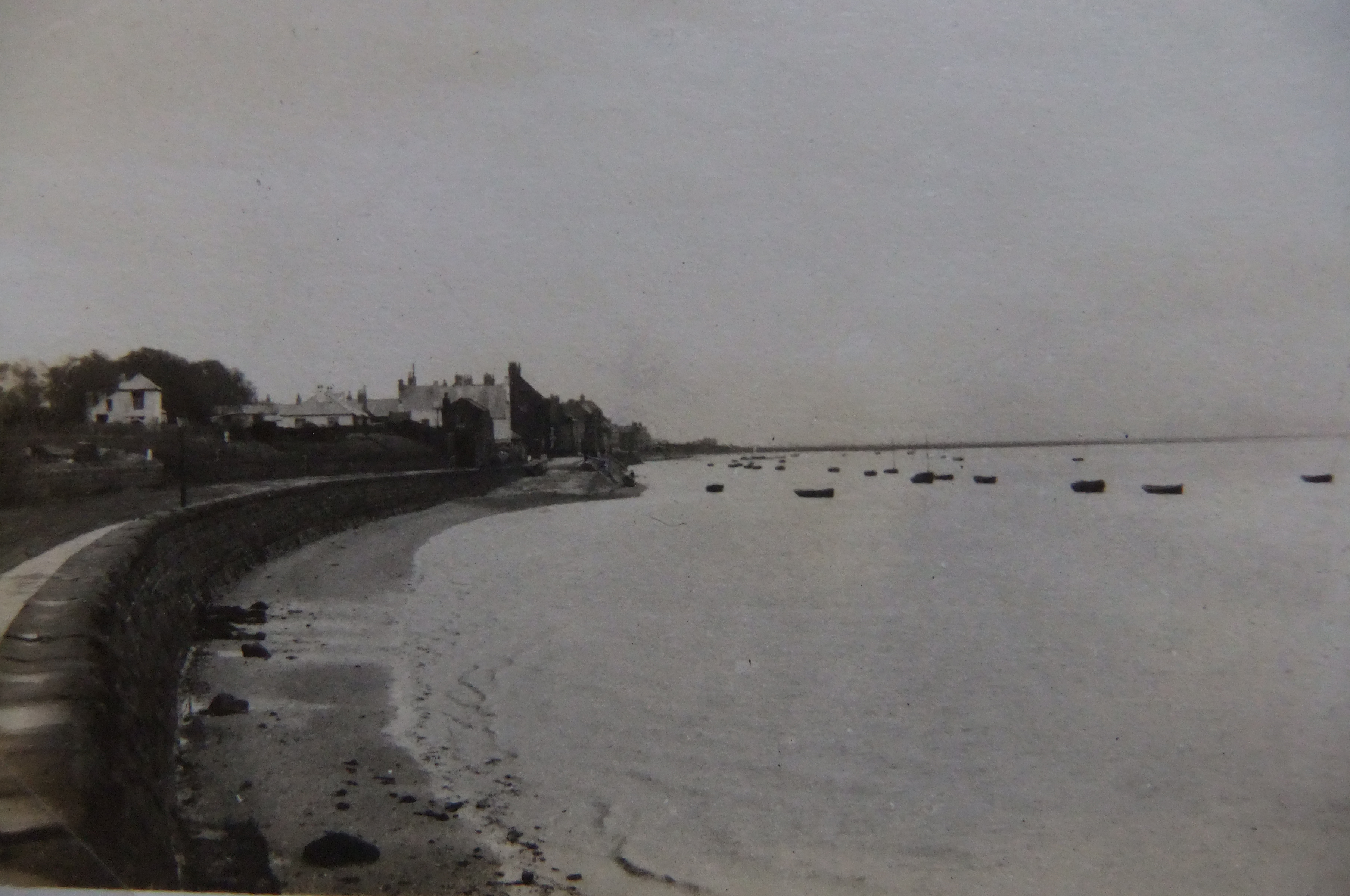
In the following year members of the Yacht Club sailed from Chester to Parkgate where they anchored opposite Mr Bloor’s Ferry House Hotel. They stayed overnight ready to take part in the race the next morning which was for a silver cup worth £10. The race was from a boat anchored opposite the Ferry House to a boat anchored opposite Moorside and back, twice over, which was a distance of six miles, crewed by the captain and his helmsman. The race was due to start at 12 noon but was delayed for an hour and a half for lack of any wind. The winner of the race was the Psyche, with Captain Clowes. Spectators were numerous as Parkgate was quite full at the time although the steam boat, Dairy Maid, from Chester arrived ‘just in time to be too late for the race’  (Chester Courant – Tuesday 08 July 1828)

The summer of 1829 had not been good so the attraction of a regatta, as well as a music festival at Chester, would, it was hoped, increase the number of fashionable
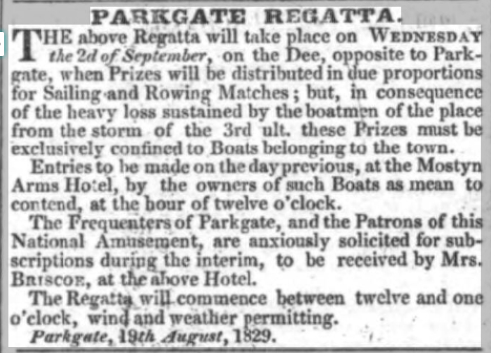
Chester Courant - Tuesday 25 August 1829 Image © THE BRITISH LIBRARY BOARD. ALL RIGHTS RESERVED

Chester Courant – Tuesday 25 August 1829
Image © THE BRITISH LIBRARY BOARD. ALL RIGHTS RESERVED

visitors.

The weather had been particularly bad in the months before and many local fisherman had had boats destroyed or damaged by storms. Amongst them was Joseph Crowder whose boat was badly damaged and Lemuel Evans who lost his boat despite his and Ned Gill’s efforts to save it. (Chester Chronicle – Friday 10 July 1829) It was therefore announced that only men from Parkgate would be allowed to enter the fishermen’s races, the prizes offering them the means of making good some of their losses.

On the day a barge belonging to Lieutenant John Monk of Neston was anchored opposite the hotel as the starting point for the races and a small orchestra played on the front for the assembled crowd.

Four boats took part in the first sailing match

The Good Intent               John Bedson.

The Mary                            Edward Gill.

The Rover                           William Bedson.

The Long Tom                   William Caterall.

The winner was Edward Gill in his boat the Mary, followed by John Bedson’s Good Intent in second place. Bad weather made it impossible to continue with races and the Regatta was resumed the following day by which time the men had disagreed about the result of the sailing match so the committee agreed to it being raced again. The final result was Good Intent, first, the Long Tom second, the Rover third, and the Mary last.

The race between the first class sailing boats had three entrants

The Siren             Edward Gill          owner.

The Ariel              Charles Brown    ditto.

The Maria            Joseph Crowder ditto.

An error by Captain Gill lost him the lead and the Ariel came in first, followed by the Maria.

The regatta in 1835 on the 29th and 30th July was followed by a dramatic rescue.
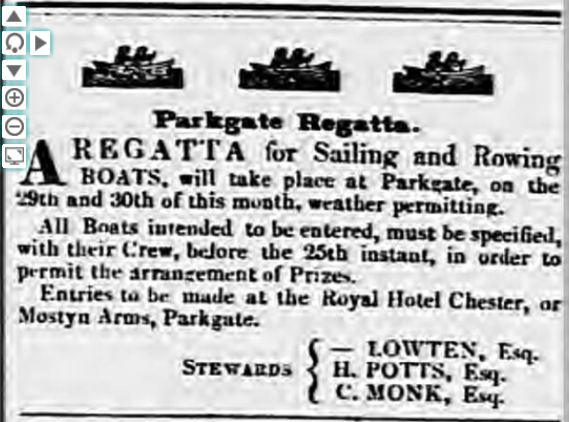
Chester Chronicle - Friday 17 July 1835 Image © THE BRITISH LIBRARY BOARD. ALL RIGHTS RESERVED.

Chester Chronicle – Friday 17 July 1835
Image © THE BRITISH LIBRARY BOARD. ALL RIGHTS RESERVED.

When the musicians from the band which had been attending the regatta at Parkgate were returning to Chester by boat the spray caused the boat to fill up with water. Neston fishermen William Brierly, who was taking a party to Flint, saw their distress single and took some of the passengers aboard and towed the boat to Parkgate.

Queen Victoria’s coronation in June 1838 was accompanied by celebrations around the country and in Chester the regatta was organised as part of the Chester celebrations. There was also a regatta a few months later at Parkgate in September attended by three thousand people from Liverpool, Chester, Flint, Holywell and Wirral. The Chester boats were well represented amongst the prize winners and Commodore of the day was Edward Watson Lloyd. The races for Parkgate boats again included John Bedson and Edward Gill in the sailing race for 1st Class boats. The race started from Mrs. Briscoe’s stage in front of the Mostyn Arms, up the river round a boat moored off Moorside Lane, outside one moored out in the Colliery Channel, and round one moored below Mr. Bloor’s stage at the Ferry House and home to the committee boat opposite the Ship Inn.

The results were :

         Fox                      J. Bedson                1st …    £3

Harlequin             Edw. Gill              2nd …     £1

Vixen                    Wm. Dennis…      3rd          10 shillings

Ariel                      Charles Brown    4th           7s 6d

In a second race for 2nd class boats the winner was James Bushell in the Good Intent who won £2. There was a race for women in two boats, the Withington belonging to Samuel Evans and Sarah, belonging to George Brierley. The women were dressed in white and wore ribbons and rosettes of blue or pink to distinguish between them.

Withington…      Samuel Evans… 1 pink £2: 10s
Sarah                    Geo. Brierley    2 blue £1 : 5s

The regatta dinner was provided by Mrs Williams at the Ship Inn and  John Lloyd  was chairman of the day.

When the 1842 Regatta took place there had been some improvements to the promenade undertaken by Edward Mostyn after he inherited the estate in 1840. Three hundred and fifty yards of the front had been reflagged and repaved. John Rigby’s steamer Lapwing anchored in front of the Inn and hospitality was provided on board for the Regatta committee and other guests. Edward Mostyn was Patron of the day, John Lloyd was Chairman and the umpire was John Monk.

The newspaper described the scene;

The scene at this time was most animating,—the clear view of Flintshire’s loftiest mountains—the Parkgate shore lined with spectators and equipages—the lingering sound of soft music from Stubbs’ Royal Harmonic Band—and the numerous yachts boats dashing through the ‘wizard stream,’ surpassed any description we can give.

Liverpool Mail – Saturday 24 September 1842),

The races were now for the Mostyn Cup, value £10 for schooner rigged boats, the Dee Cup, value, £5 for jigger rigged boats, the Neston Cup, value £3, for jigger rigged boats, Congreve Stakes, value £2 for smaller boats and the Leighton Stakes, value £3 for four oared boats. The winner of the Dee cup was Richard Matthews in Queen Mab and James Bushell won the Neston Cup in Harkaway.

There was again a dinner at the Ship and another at the Mostyn Arms for the committee with John Rigby of Hawarden in the chair.

In 1843 the same names featured amongst the winner: James Bushell (Neston Cup for boats not exceeding 17 feet keel length)and Richard Matthews (Dee cup for sailing boats not exceeding 10ft keel)both  won prizes. Mr Bushell was less successful in the Leighton Stakes for four oared boats when Samuel Evans took the prize in his boat the Withington. John Mealor came second to Richard Matthews in the Dee Cup. The Chester Rowing Club boats took first and second prize in the race for four oared gigs rowed by gentlemen and members of the Dee Yacht Club, John Lloyd Jones and W.M. Wilkinson, competed for the Mostyn Cup for Schooners not exceeding 10 tons. This was a drawn race because othe lack of wind and strong ebb prevented them rounding the finishing flag boat. At the dinner at the Mostyn Arms provided by Mrs Briscoe, E. Watson Lloyd was in the chair with George Challoner, Vice Chair.
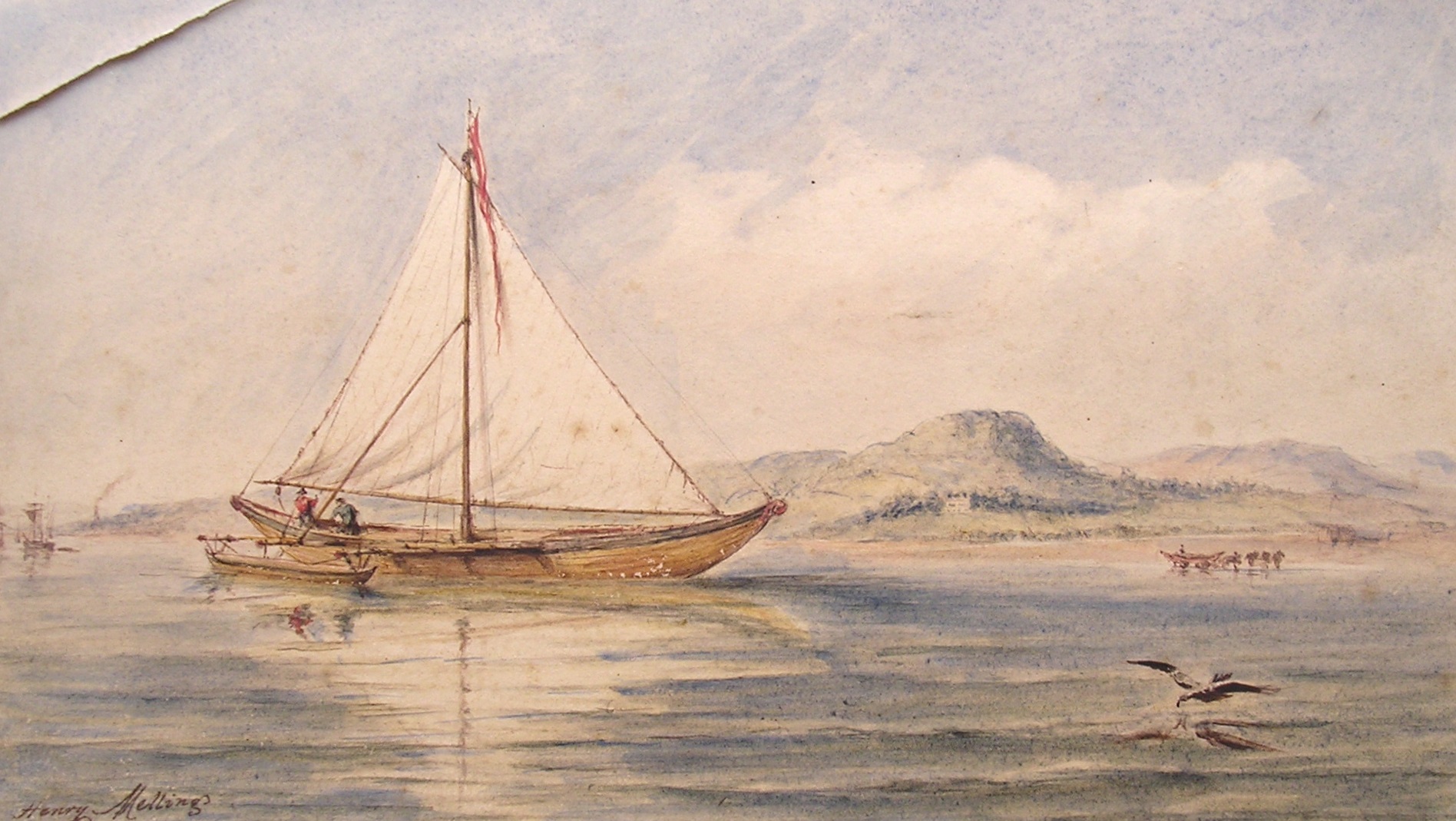
Water colour by Henry Melling, a keen local yachtsman.

Water colour by Henry Melling, a keen local yachtsman.

Royal Dee Yacht Club

When John Lloyd died in 1844 his son, Edward Watson Lloyd,  succeeded to his position as Prothonotary of Chester and he was also elected Commodore of the Yacht Club. Edward Watson Lloyd had continued to be an active member of both the Dee Yacht Club and the Chester Victoria Rowing Club despite having had to have a leg amputated in 1828. In 1847 The Dee Yacht Club became the Royal Dee Yacht, thanks to his efforts and those of Edward Mostyn, M.P.

We understand that the Hon. E. M. Lloyd Mostyn. M.P. at the request of the worthy Commodore Mr. E. W. Lloyd, exerted his influence to obtain Royal patronage for the club ; and that Mr. W. Ayrton’s interest with his friends at the Admiralty has contributed the successful issue of the application for carrying the distinguishing flag or her Majesty’s Fleet. This advancement of the Royal Dee Yacht Club will tend to make Parkgate a popular and fashionable bathing place next season..

(Chester Chronicle – Friday 03 December 1847)

Another member, William Ayrton, successfully requested permission from the Admiralty to display the Blue Ensign of the Queen’s fleet.

By 1848 the club members numbered 40 (17 of whom owned yachts) with William Ayrton as Secretary and Edward Watson Lloyd, then living at Fort Heswall near Parkgate, as Commodore.

They held their annual dinner in October of that year at the Mostyn Arms and James Scott Walker was a guest. His exhibition of models of vessels built with a double keel of his own design at the dinner was widely reported throughout the country. The design does appear to have been patented.

ROYAL DEE YACHT CLUB. A numerous meeting of the members of this club was held at Tuesday last, at their club room, Park-gate, Cheshire, to audit the accounts, receive the reports of the treasurer and secretary, and make arrangements for the next season. W. Bulkeley Hughes, Esq, M.P., and Joshua Fletcher Lace, Esq, were ballotted for and elected members. Some very interesting models were exhibited by Mr Scott Walker of vessels constructed on new principle, and well adapted to the waters of the Dee, which is net navigable above Hoylake, except at certain hours before and after high water. The new feature in these vessels, is, that (being very flat bottomed) they have a double keel, and the cbief objects aimed at are, a very shallow draft of water, combined with great safety and speed, and a peculiar adaptation for the screw as a propelling power. … A very numerous party of the members and their friends, among whom we noticed the officers of the 46tb, now garrisoned at Chester, sat down to dinner at seven o’clock ; Commodore Lloyd in the chair, supported by the honorary secretary, Mr Ayrton, vice-chairman An interesting speech was made by Sir Edward Walker in reply to hishealth being drunk in conjunction with the River Dee Commissioners, in which he gave a brief account of exertions they were making to recover the powers now vested in the River Dee company, and so lamentably abused, far protecting the interests of the port of Chester, and restoring the navigation of the river. The matter has been brought before both Houses of Parliament, and it is hoped that next session a bill will be passed empowering the commissioners either to compel he River Dee Company to fulfil their obligations or surrender their trust…’

          Bell’s Life in London and Sporting Chronicle – Sunday 15 October 1848
 

 Jonathan Grindrod 1805 – 1896

Born in Liverpool he was first an iron founder then naval engineer. An enthusiastic yachtsmen he was commodore of the Royal Mersey Yacht Club before becoming Commodore of the Royal Dee Yact Club. He lived at Leighton House after moving from Parkfield, Birkenhead.

James Scott Walker 1793 – 1850

The son of a Scottish clergyman he was a trader in South America before coming to England where he found employment as editor of the Liverpool Mercury. He left the Mercury to start his own periodical, the Lancashire Museum. Later he moved to Preston where he was editor of the Preston Chronical and Preston Journal. Moving back to Liverpool he contributed to several local papers, especially the Liverpool Standard. William Roscoe of Liverpool was a friend and neighbour and he also corresponded with Sir Walter Scot t. During his life he had several poems and books published, including an account of the opening of the Liverpool to Manchester Railway in 1832 during which William Huskisson, MP, met his death.

 By the end of the late 1850s Parkgate’s fortunes were in decline. The Mostyn estates had been sold in 1849 and new resorts were developing nearby at Llandudno and New Brighton. And the Royal Dee Yacht Club was suffering a similar fate, perhaps due to the premature death of Edward Watson Lloyd in 1850.

1863 – 1868

In 1863, however, some of the surviving members attempted to revive the Royal Dee Yacht Club and held a meeting at which Several Jonathan Grindrod of Leighton House, Parkgate was elected Commodore and Mr Melling of Liverpool, Vice Chanceller. Mr Thomas Dixon of Chester was honorary secretary and Mr W. Jenkins of Neston acted as auditor. The Boathouse or Pengwern Arms was to be the marine station on the Dee and they planned to hold their monthly meetings there on the first Saturday of the month. They planned to hold a regatta at Parkgate on the 1st August at high tide when the expanse of water would last for about five hours. It would be the first time for seventeen years that a regatta had been held there.

Parkgate also was enjoying a period of renewed popularity.

For many years Parkgate has been considered a very dull locality, and although termed by some ” watering place”, it is only lately that invalids and other have commenced to visit it in any great numbers. At this particular point the Dee is about five miles wide, and the view across the river of the small towns, green fields, and mountains of Wales is really charming, the scene being greatly heightened at high water. When the tide is out, however, extensive muddy bed of the river has anything but an attractive appearance. Still, Parkgate is pleasantly situated, and the crowded state of lodging houses, and the high price obtained for apartments, are proofs that the fortunes of this ancient ” port” are improving. Within the last year or two some rather elegant houses have been erected, and on all hands there are to be witnessed symptoms of gradual progress.

Liverpool Mercury – Monday 03 August 1863

When the day arrived the weather was in their favour and the scene at Parkgate was particularly attractive.

The parade fronting the river, which is about a mile in length, was profusely decorated from one end to the other with flags. and a similar display was made from many of the houses. On the Dee there was a large number of sailing boats, and these, together with the flag-ship and some yachts, were dressed with bunting, the whole presenting quite a gay and animated scene which was enhanced by the beautiful weather.

Liverpool Mercury – Monday 03 August 1863

The sailing was over a course of about six miles, from the flag-ship, moored opposite to the Boathouse Inn, to a flag-boat off Gayton Cottage; to a flagboat to the westward; to a flag-boat at the south end of Parkgate, ending at the flag vessel

Chester Chronicle – Saturday 11 July 1863

Fishermen’s races were held for 1st and 2nd class boats with prizes of £4 and £3 respectively.

FIRST CLASS

Jane (belonging to Samuel Mealor). 1st;

Lizzie Jane (belonging to Richard Matthews). 2nd ;

Champion (belonging to John Mealor), 3rd

SECOND CLASS

John and Mary (William Brierley), 1st ;

Queen Mab (John Orford). 2nd ;

Fanny, Gipsy King, and Elizabeth were not placed

The regatta ended with a ‘Duck Hunt’; for a prize of £1 the ‘duck’, a young man named Brierley, was pursued in a punt by the ‘hunters’, also in punts. After evading them for 15 minutes, he won the £1 prize.

At the regatta held in  1864 Jonathan Grindrod came second with his new yacht, the Deva, in the race for yachts under 12 tons, while the Barracouta, owned by H. M. Hannay came in first. The sailing course was from the flag- vessel off Heswell Deep to a flag-boat to the west-ward, ending at the flag-vessel off the Boathouse. Richard Matthews again came first in the fishermen’s race for first class sailing boats beating Samuel and John Mealor. Competing in the race for 2nd Class boats were William Brierly, Samuel Jellico, William and John Campion, James Bushell and Samuel Evans. William Brierly won easily in his boat the John and Mary. 

Guests at the dinner afterwards at the Pengwern Arms, as well as the Commodore Jonathan Grindrod, included Henry Churton, coroner and Duncan Graham, Captain of the Neston Volunteers.

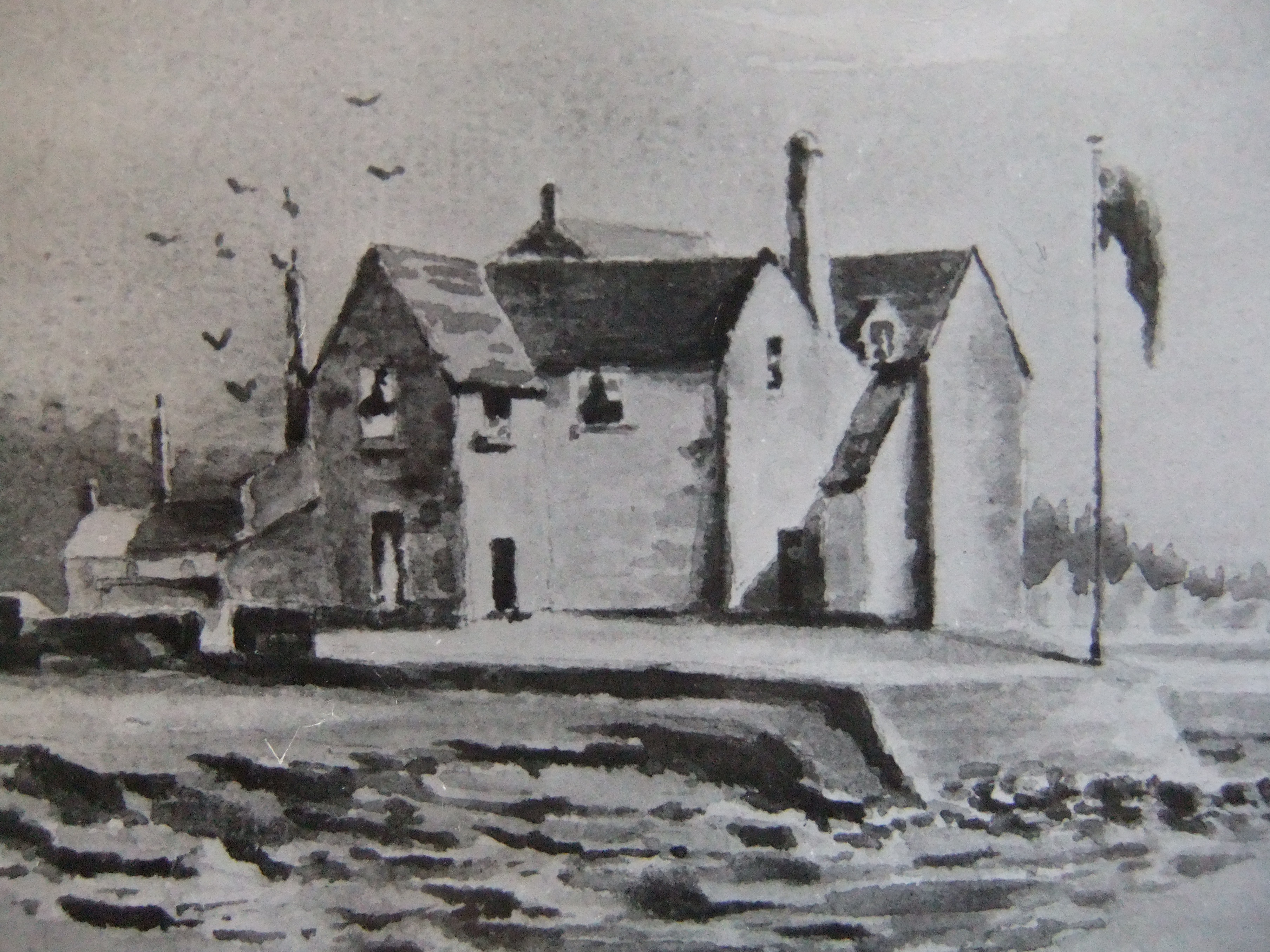
Pengwern Arms (Boathouse)

Pengwern Arms (Boathouse)

Although the Royal Dee Yacht Club organised the regattas of 1867 and 1868 they were clearly designated as ‘fishermen’s regattas’ with their own regatta being held separately.

In 1867 William Mellor, in Sailor’s Pride, won the race for 1st Class boats with a keel not exceeding 22 ft. Also competing were William Mealor in Kitty Darling and John Mealor in Champion of the Seas. The race for 2nd Class boats, keel not exceeding 20ft was won by Samuel Mealor’s Jane. There were five competitors in the race for the third class boats, sailed by fishermen belonging to Parkgate, and not exceeding 18 feet keel: the John and Mary, S. Brierley; Cutty White Throat, W. Mealor; Alice,S. Davies; Happy Return,” R. Evans, jun., and the ” Diver.” W. Bedson. The Cutty White Throat carried off the prize, winning by about 300 yards. In the concluding ‘duck hunt’ the duck was J. Bedson.

In 1868 the usual sailing and rowing races were followed by donkey races on the sand ridden by boys, without saddle or bridle.

Soon after this the Yacht Club began holding their regattas further afield (at Heswall in 1871 and Hilbre in 1873 and eventually at Holyhead and it was more than twenty years before another regatta at Parkgate was reported in the local papers.

1893 – 1914

However, in 1890 two local fishermen held their own impromptu race for a bet of £1 which gathered a small but interested audience.

PARKGATE Boat Race — A novel event took place at Parkgate on Tuesday morning when John Mealor and William Campion, two well-known fishermen, made a wager of £1 per side on the racing powers of their respective trawling boats. The event caused much excitement, and several hundred persons watched the race from Parkgate, while others stationed themselves upon the shore ; some even going as far as Dawpool — four miles. The boats, which are very similar in build, Campion’s being the longest by a few inches, left at 9: 20 with a fair wind, against a flood tide which was rolling in at the rate of about five miles per hour, and headed for the Dawpool Deep Buoy, which they had agreed should be the extent of the voyage. Mealor’s boat Tyrant led slightly all the way and landed back at the Quay wall half a minute in advance of Campion. Time, 1 hour, 37 minutes.

        Cheshire Observer – Saturday 07 June 1890

Whether this prompted the idea or not  a joint regatta Parkgate and Heswall Regatta was proposed. By that time the silting up of the river at Parkgate was causing problems for the fishermen as well as the Royal Dee Yacht Club and some Neston and Parkgate fishermen  had moved to Heswall; notable among them were the Bedsons, Brierlys and Evans who had participated in many of the regattas in the past.   It was organised by Thomas Comber of Leighton and Mr Ellwood of Heswall. Thomas Comber was a local magistrate and both he and his wife were active in promoting the welfare of the Parkgate fishing community.

The races were restricted to the ‘nobbies’ owned by fishermen from Parkgate and Heswall and were over a demanding distance with a time allowance given to some boats. The course was from Heswall Point buoy to Greenfield buoy, from there round Flint buoy and back to the flag boat at Heswall, then to the old flat mast and back to the flag boat, a distance of about fifteen miles. Heswall fishermen, W. Brierley and Samuel Evans won first and second prize in the first race. The second race was won by James Lewis of Parkgate and others from Parkgate taking part were William Smith, William Campion, John Mealor junior and James Smith.

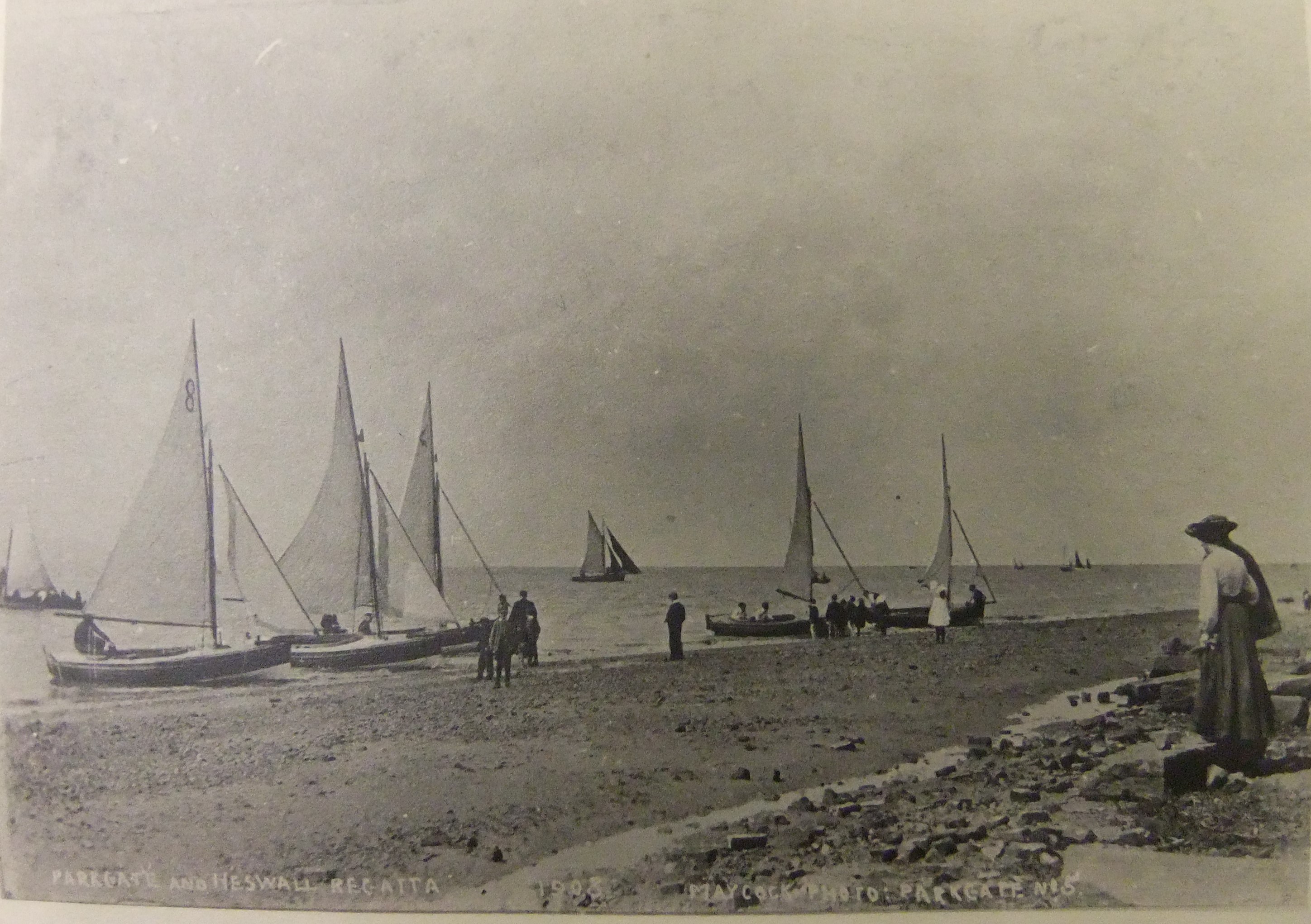
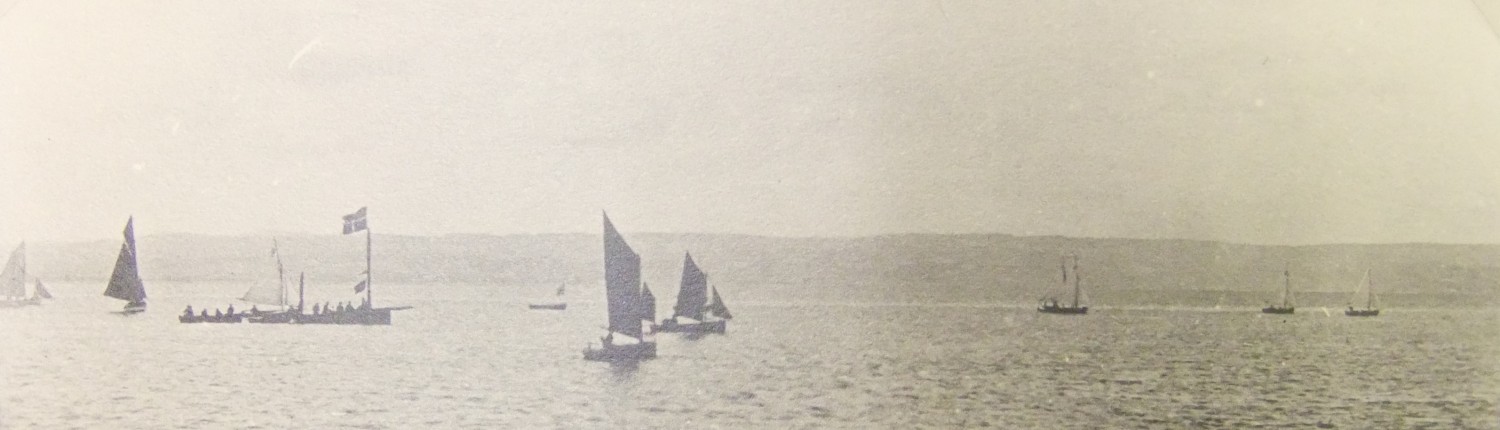
Parkgate Regatta 1903

Parkgate Regatta 1908

When another regatta was organised in September 1898 at Gayton Cottage, midway between Heswall and Parkgate, the patrons included Dr Speechley and Robert Morrison with Mr. R. L. Price as treasurer.  Two local fishermen, Tom Matthews and ‘Fully’ Smith, were also on the organising committee. The first race was a handicap race for cutter rigged fishing boats won by George Evans in his boat Volunteer. The race for yawl rigged fishing boats was won by John Smith with J. Mealor and John Campion coming second and third. There was also a race for sailing punts won by H. Brierley in Parrot with Tom Matthews coming second and W. Fewtrell third.

The Regatta of 1899 was less successful despite the efforts of the chairman of the committee, D. C. Pugh, district councillor, and fisherman Tom Matthews. The race for fishing cutters had six entrants but as only D. Campion turned up his boat, the Lily, was declared the winner. The Campions, Mealors and Evans were as usual well represented. Some doubt was expressed as to whether the regattas would continue.

It appears that interest in the regattas revived and they were eventually resumed. In 1903 the regatta took place at Parkgate in beautiful weather and the races included one for the Hoylake Club’s new Opera Class boats which was won by Gaiety Girl with Country Girl coming a close second.

The Hoylake opera class was one of the best of the day, a desperate struggle between Gaiety Girl and Country Girl being won by the former with little to spare. La Poupee was fourth, Marjorie fifth, and Runaway Girl sixth.

Cheshire Observer, Saturday August 29, 1903

The results for the fishing boat races were :-

Race for fishing cutters

1             Onward                J. Peters
2             Three Brothers   John Wright

First-class fishing boats: –

1             Tyrant                          John Mealor
2             Trust in Providence  John Peters

Second-class boats:-

1             Joseph and Mary      G. Mellor
2             Annie                            S. Evans
3.            Betsy                            G. Fewtrell

Punt sailing race:

1             Secret                          C. I Brierley
2.            Skipper                       J. Peters
3.            Isabel                         Jas. Maddocks.

Rowing race:

1,            James Smith
2,            G. Milnor.

A regatta was held in July 1914 but afterwards, for the duration of the War which was declared soon afterwards, no regattas were held.

The Chester Chronicle reporter ( Saturday 18 July 1914) noted that the day was

perfect, the channel deep and navigable, and Parkgate had never looked so beautiful, and was thronged with visitors, who added to the colour scheme with their light and dainty dresses

Results:

Handicap for Nobbies. —1, Mostyn Lily, Geo Evans (scratch), 2min 26.19secs; 2, Onward, Dick Peters (3mins), 2mins 28.3escs ; 3, Tartar, W H Brierley (3mins), 28.80secs.

Ist Class Yawls.—7, Venessar, Jas Smith (2mins), 3mins 31.55secs; 2, Mary Alice, L Mellor (3 ½ mins) 3mins 32.6 sees; 3, Trust Providence, H Peters (2mins), 3mins 32.40secs.

Centre Board Fishing Punts. —1, Unknown, John Mealor; 2, Florence Bennett, H Brierley; 3, Mona, John Peters (did not finish).

Small Yawls.—1. Primrose, W Campion: 2, Parrot. J Robinson; 3, Thomas and Mary, T Matthews.

Cockle Punts—l, I’m Here, Sam Evans: 2, Five Brothers, Wm Jones; 3, Sea Queen, John Mealor.

Rowing Boats Tug-of-War.—William Fewtrell and J Robinson.

Open Rowing (fishermen excepted).—Bertie Williams and Geo Fewtrell

Fishermen’s Rowing’. —G and B. Fewtrell

Sculling.—l, Higgins; 2, Evans; 3, Murray.

Old Men’s Race.—Jack Smith,

Girls’ Race.—l, Lizzie Bushell; 2 Edith Robinson; 3, May Bushell.

Tug-of-War (all comers).—Mersey Iron Works.

Although the men from the Ironworks at Ellesmere Port were the official winners their opponents, Neston and Parkgate fishermen, had some unofficial help from their womenfolk; when it became obvious that they were losing the women rushed forward and pulled on the end of the rope. When the umpire protested he was firmly told that the Port men should have brought their own women.

The beautiful day ended with an unusually violent storm.

REMARKABLE: STORM —The regatta at Parkgate closed with a magnificent and natural firework display. It was felt that a storm would succeed the intense boat, and it came with a fierce and sudden violence. So far removed was the actual danger zone. that residents of the Wirral Peninsula were able to watch with safety the wonderful panorama. It raged for hour. Many long years have passed since lightning so incessant and brilliant is remembered. It moved along almost the whole of the Welsh range of mountains and dwelt long in the north, showing with daylight clearness the Point Ayr, Hilbre Island, and the estuary. It was very awe-inspiring. A waving flame occasionally curved along the coast, a flowing ribbon of fire. Many people were out the display from points of vantage Some residents in did not use artificial light Their houses, were brightly illumined with almost ceaseless flashes.

Cheshire Observer – Saturday 18 July 1914

‘…the hardy sunburnt ladies of Parkgate and Neston…’

Women’s races were regularly included in the Chester Regattas and sometimes in the regattas at Parkgate. They were, for the most part, reported as an amusing addition to the serious races of the day and to the modern reader they are somewhat patronising. However it is evident from the reports that the fisherwomen of Parkgate and Neston were redoubtable and confident women.

In the regatta of 1838 a race for four-oared boats rowed by women was included between two boats, the Sarah owned by George Brierley, and the Withington, owned by Samuel Evans. The women wore white and were distinguished by ribbons and rosettes of blue for one boat and pink for the other. The crew of the Withington boat won £2.10s which would have an equivalent value today of over £100.

In 1840 the women ventured further afield, taking part in the Liverpool Regatta of 1840 at Monks Ferry. The prize was £5 and competing boats were rowed by a crew from Neston against a crew from Parkgate.

The contest of feminine skill and strength was very amusing. The crews of each boat were dressed in white, with distinguishing ribbons. They struggled hard but we must say the rowing was much better than the steering in either boat. The Parkgate ladies beat their competitors by 100 yards.

Chester Chronicle – Friday 24 July 1840

The Parkgate Regatta 1842 increased the prize to £5 and this time there were three boats competing with the Neston crew, who came first, wearing blue, Parkgate pink and a crew from Ness, who came in last, wearing scarlet ribbons.

Liverpool Mercury - Wednesday 28 May 1856 Image © THE BRITISH LIBRARY BOARD. ALL RIGHTS RESERVED.

Liverpool Mercury – Wednesday 28 May 1856
Image © THE BRITISH LIBRARY BOARD. ALL RIGHTS RESERVED.

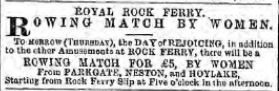
In 1856 a Regatta, organised by the Mersey Yacht Club as part of the celebrations for the end of the Crimean War, featured a race at Rock Ferry between the rival Parkgate and Neston women with a prize of £5 and 30 shillings second prize.  The organisers obviously expected the race to be attraction enough for them to advertise it in the newspapers. The names of the Parkgate rowers were Jane Evans, Mary Williams, Kitty Naylor, Ann Naylor, and Jane Blundell. The Neston Rowers – Susannah Swift, Mary Milner, Betsy Jones, Margaret Rodgers, and Ann Livings.

Liverpool Mercury – Friday 30 May 1856

They looked well, and are evidently strong and powerful women. After the match was concluded they adjourned to the green and had a dance, and were liberally treated by the bystanders.

In August of the same year they had another, and more lucrative outing to a regatta again held at Rock Ferry. The course they had to row was from the flagship off Rock Ferry to the flagboat off New Ferry and back to Rock Ferry.

The contest resolved itself into Neston v Parkgate, the female contesters hailing from those districts, There were five women in each of the two boats entered, and they were attired in white bedgowns and striped petticoat. The Neston ladies were distinguished as the ‘pinks,” and the fair rowers from Parkgate as the “blues,” from the circumstance of their being decorated with ribbons of those colours. The race was capitally contested, the females showing great agility and skill in the use of the oar. The ‘pinks,” or the Neston ladies, got in first; but the “blues” disputed the fairness of the contest, and the race had to be run over again. The “pinks” were again successful.

          Liverpool Mercury – Friday 22 August 1856

The prize money was not the only reward for their endeavours.

After the aquatic sports were over, the committee met In the Rock Ferry Hotel, for the purpose of presenting the prizes. …. The female rowers mustered in force to receive the prize. The”blues,” or Parkgate women, avowed that they had been put to considerable expense in coming to Rock Ferry, and to go back to their fishing town or hamlet pocketless they considered monstrous. Eyeing a very comely and benevolent looking gentleman in the committee room, they seized hold of his body aand “lifted” it about a yard from the floor. This hint was sufficient. The gentleman, for the honour of being “lifted,” generously gave them a sovereign, and a Subscription having been entered into, the “blues” raised as much “tin” as the “pinks”.

Although there were no races for women reported in the 1863 regatta their  presence amongst the spectators was noticed.

As has been already stated, there was a large gathering of people, conspicuous amongst whom were the hardy sunburnt ladies of Parkgate and Neston, whose voices are quite familiar to the residents of Birkenhead as vendors of prime cockles and mussels.

Liverpool Mercury – Monday 03 August 1863

By 1898 the reporting had become somewhat more respectful

The results of the Ladies’ rowing race to be rowed in fishing punts were recorded as

1, 10s., Mrs. Evans and Miss Mellor 2, 5s., Mrs. Robinson and Miss Jones.

James Bushell 1813 – 1891

James Bushell was the grandson of Molly Bushell, the inventor of Everton toffee. His father, also James, moved to Parkgate. James junior was employed on the Parkgate to Bagilt ferry before working as a fishermen. He married Elizabeth Peers at St Nicholas church in Liverpool in 1838. They had four sons, Harrison, Robert, James and Thomas and two daughter, Elizabeth and Esther. When he died in 1891 his death was reported at some length in the local paper and he was described as a well known local character, know for his stories about Parkgate in the  past.

Elizabeth Mealor (nee Peters) 1819-1891

Elizabeth (Bet) Mealor was the daughter of Thomas Peters, shoemaker and his wife Ann who lived in Chester Lane Neston. She married fisherman John Mealor at St Nicholas Church, Liverpool. They moved for a brief period to Australia where John found working during the gold rush and Betsy earned money by doing laundry for the other diggers. When they returned they had enough money to buy some of the Parkgate cottages. Both she and husband John took part on the regattas.